How Long Do Leftovers Last? A Practical Fridge and Freezer Guide
Most cooked leftovers keep for 3 to 4 days in a refrigerator set at 40°F or below. Use this guide to cool, freeze, thaw, and reheat them safely.
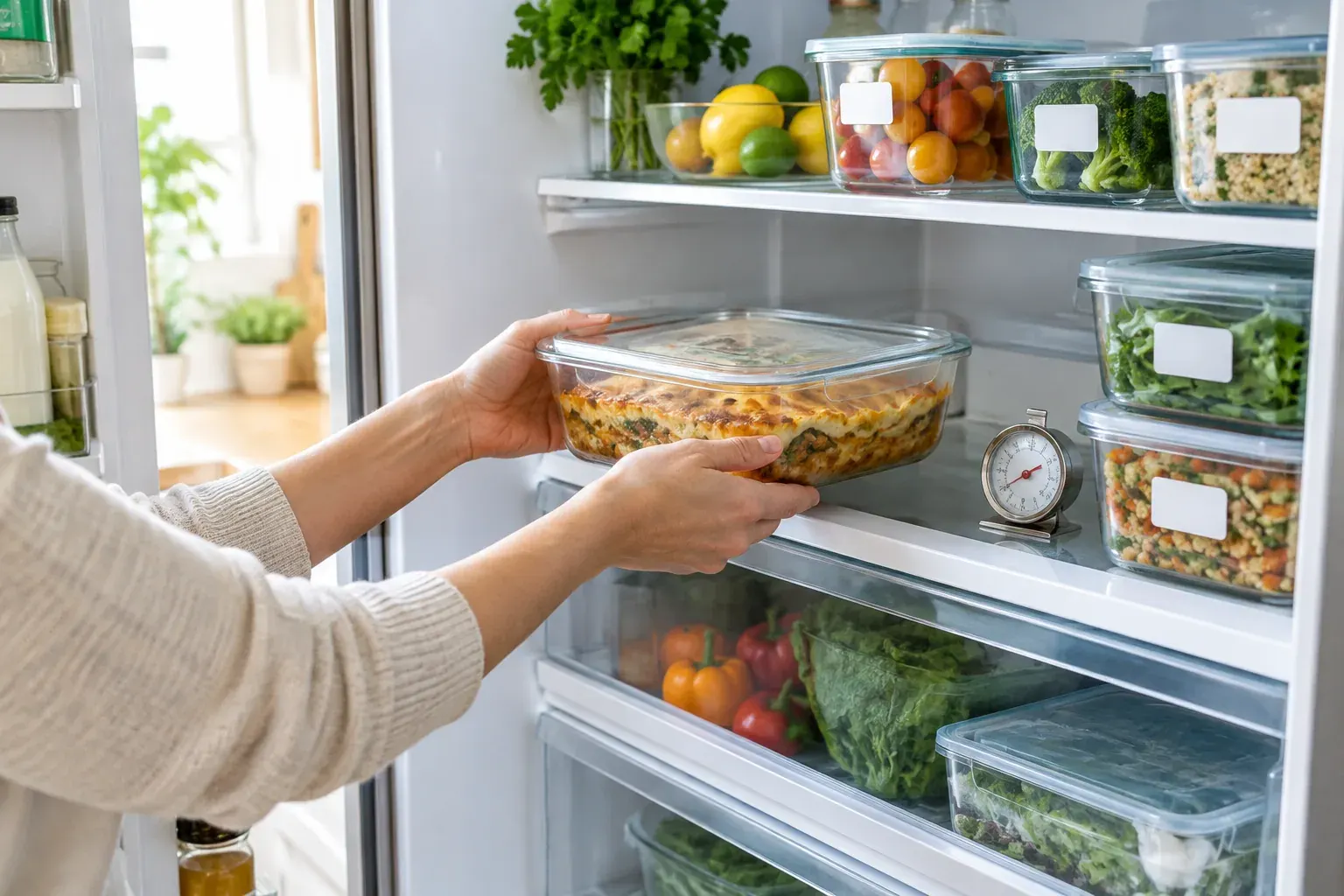
Key takeaways
- Refrigerate perishable leftovers within 2 hours, or within 1 hour when the temperature is above 90°F.
- Keep your refrigerator at 40°F or below, and use most cooked leftovers within 3 to 4 days.
- Freeze leftovers in airtight portions; freezer time limits are mainly about quality, not safety.
- Thaw in the refrigerator, in cold water, or in the microwave, then reheat leftovers to 165°F.
- Discard food left out too long or stored too long. Smell and appearance cannot confirm that it is safe.
In this guide
Leftovers can make weeknight meals easier and help you waste less food, but only if you store them safely. Timing, refrigerator temperature, and the way you cool a large dish all affect how long food keeps.
This guide gives you practical storage times for common foods, plus steps for freezing, thawing, reheating, and deciding when to throw something out. When in doubt, be cautious: food can make you sick even when it looks and smells normal.
The basic safety rules
Three rules cover most home leftovers: chill them promptly, keep them cold, and use them on time. The widely used food safety guidance is to refrigerate perishable food within 2 hours of cooking or serving. If the temperature is above 90°F, such as at an outdoor gathering, refrigerate it within 1 hour.
Set your refrigerator to 40°F or below. A refrigerator thermometer can help you check the actual temperature, since the appliance dial may not show degrees. Keep the freezer at 0°F or below.
For most cooked leftovers, plan to eat them within 3 to 4 days in the refrigerator. Freeze portions you will not use in that window rather than waiting until the last day. If you cannot remember when food was made, do not guess based on its smell or appearance.
Good to know: The 2-hour rule applies to the total time food spends at room temperature, including serving time. If a dish has been sitting out longer, discard it instead of putting it back in the refrigerator.
How long common leftovers last
Use the chart as a practical guide, not a reason to keep food past the safe refrigerator window. The freezer ranges are for best quality. Food kept continuously frozen at 0°F or below remains safe, but its flavor and texture can decline over time.
| Leftover type | Refrigerator at 40°F or below | Freezer for best quality |
|---|---|---|
| Cooked meat, poultry, or fish | 3 to 4 days | About 2 to 6 months, depending on the food |
| Soups and stews | 3 to 4 days | About 2 to 3 months |
| Casseroles and cooked mixed dishes | 3 to 4 days | About 2 to 3 months |
| Pizza | 3 to 4 days | About 1 to 2 months |
| Cooked rice and pasta | 3 to 4 days | Freeze promptly; texture varies, so use within a few months for best quality |
| Egg, chicken, tuna, or macaroni salad | 3 to 4 days | Freezing is not recommended for quality |
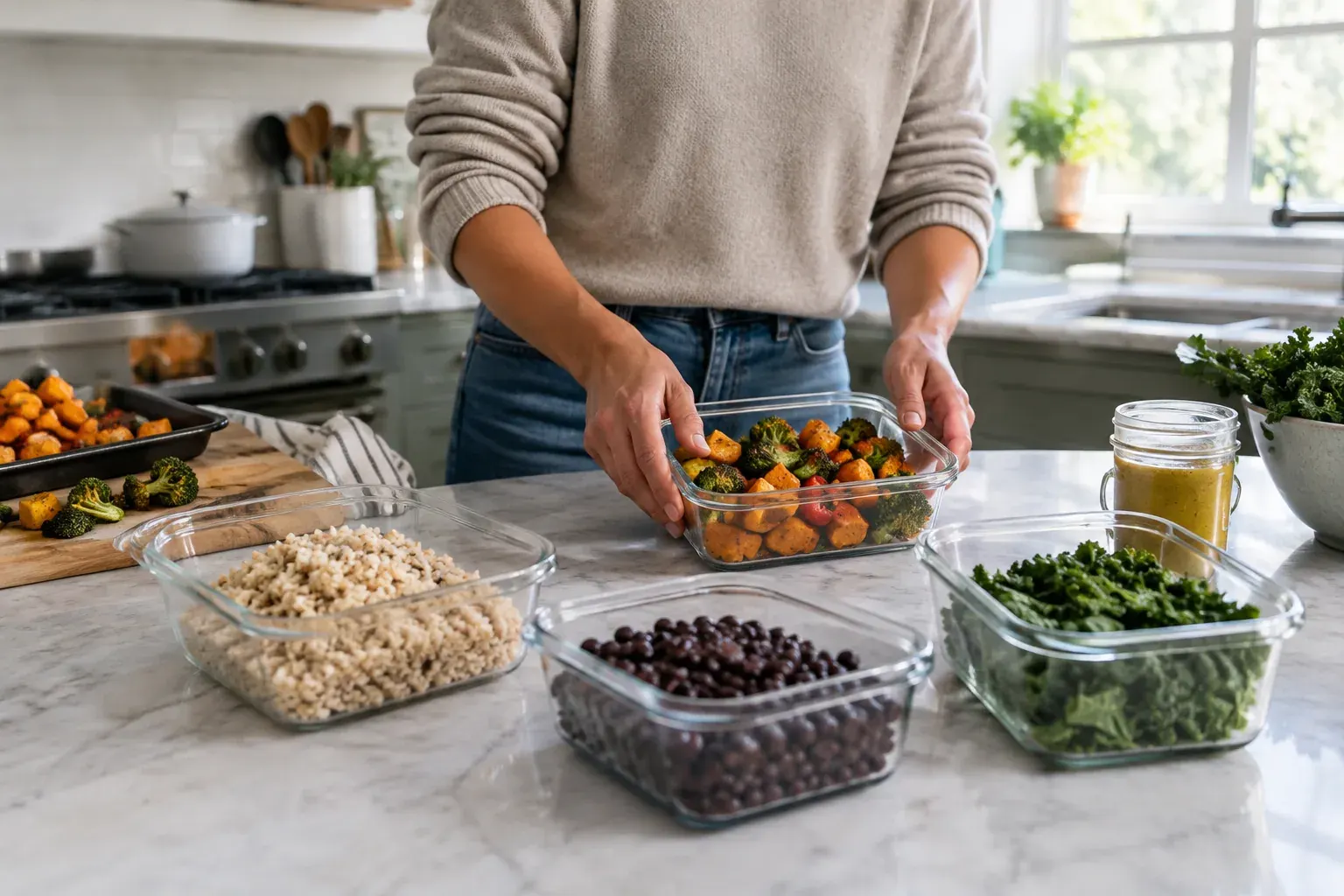
Keep foods covered in clean, airtight containers. For guidance on planning meals around what you already have, see Meal Prep for Beginners. A little organization makes it easier to use the oldest portions first.
Cool and store leftovers promptly
You do not need to wait for a large dish to reach room temperature before refrigerating it. Divide soups, casseroles, and other large amounts into smaller portions so they cool more quickly. Shallow containers help, too.
Follow these steps after a meal:
- Set aside portions you plan to keep before serving food family-style for a long time.
- Divide large quantities into shallow, clean containers. Use leak-resistant lids or cover them securely.
- Refrigerate or freeze the portions within the time limit. Label each container with the food and the date.
- Arrange containers so cold air can circulate, and avoid packing the refrigerator so tightly that cooling is restricted.
- Store ready-to-eat leftovers above raw meat, poultry, and seafood to reduce the chance of drips contaminating them.
Put leftovers in the refrigerator even if they are still warm. If you have a very large pot of hot food, split it into smaller containers first rather than putting the entire pot in the fridge. Do not leave food on the counter to cool for hours.
A label takes only a moment and removes the guesswork later. Place newer portions behind older ones, and check the dates before you plan a meal. If you are already cleaning shelves or containers, this kitchen deep-cleaning checklist can help you keep storage areas clean.
Pro tip: Freeze food in meal-size portions. Smaller packages chill and thaw more evenly, and you only need to reheat what you plan to eat.
Freezing leftovers for later
Freezing is useful when you will not eat leftovers within 3 to 4 days. Freeze them while they are still fresh, rather than treating the freezer as a way to rescue food that has been in the refrigerator too long. Use freezer-safe containers or bags, leave a little room for liquids to expand, and press excess air out of bags where practical.
Label packages with the food and freezing date. For best quality, protect food from air and moisture, which can cause freezer burn. Freezer-burned food is generally a quality problem rather than a safety problem if it stayed frozen, though dry or discolored areas may taste unpleasant.
The times in the chart are quality targets, not strict safety deadlines. If food stays frozen at 0°F or below, freezing keeps it safe for longer, but flavor and texture can become less appealing. Follow any stricter product instructions when freezing packaged foods.
Some foods do not freeze well. Mayonnaise-based salads, dishes with crisp vegetables, and sauces that rely on cream may separate or turn watery. You can still freeze many of these foods if you accept a change in texture, but it may be better to make a smaller amount or use it within the refrigerator window.
Thaw and reheat safely
Thaw frozen leftovers using one of these methods:
- In the refrigerator: Put the container on a plate or tray to catch drips. This is usually the easiest method, but it takes longer, especially for larger portions.
- In cold water: Keep food in a leakproof package and submerge it in cold water. Change the water every 30 minutes, and cook or reheat the food as soon as it has thawed.
- In the microwave: Use the defrost setting if available, then reheat the food right away.
You can also reheat leftovers directly from frozen. Allow extra time and check the temperature in more than one spot. Do not thaw perishable food on the counter, where the outside can warm while the center is still frozen.
Reheat leftovers to 165°F, checking with a food thermometer. In a microwave, cover the food, stir or rotate it during heating, and let it stand briefly before checking several places. Cold spots can remain, especially in dense dishes. Bring soups, sauces, and gravies to a rolling boil when reheating.
Reheat only the amount you expect to eat. Repeated warming and cooling makes it harder to handle food safely and can reduce quality. If you need to keep a dish hot for serving, keep it hot rather than letting it sit lukewarm.
Safety note: A slow cooker is not a safe way to reheat cold leftovers. Reheat food to 165°F on the stove, in the oven, or in the microwave first, then use a slow cooker to keep it hot if needed.
When to throw leftovers away
Discard food if it has been left at room temperature longer than the 2-hour limit, or longer than 1 hour when the temperature is above 90°F. Also discard refrigerated leftovers that have been stored beyond the recommended 3 to 4 days, unless they were frozen in time.
Do not taste food to decide whether it is safe. Harmful bacteria may not change its smell, appearance, or flavor. Mold, unusual texture, or an off odor are reasons to throw food away, but the absence of those signs does not prove it is safe.
If your refrigerator loses power, keep the door closed as much as possible and check the temperature when power returns. Perishable food that has been above 40°F for 2 hours or more should be discarded. If you cannot tell how warm it got or how long it was warm, take the cautious option.
Be especially careful when serving leftovers to young children, older adults, pregnant people, or anyone with a weakened immune system. These groups are at greater risk of serious foodborne illness, so do not stretch storage times or rely on smell tests.
Common leftover mistakes to avoid
- Leaving food out while you wait for it to cool: Divide it into shallow portions and refrigerate promptly.
- Putting a whole stockpot in the refrigerator: Large quantities may cool slowly. Use smaller containers instead.
- Treating the freezer as a reset button: Freezing does not make food safe again if it sat out too long or was already stored too long.
- Using smell as the deciding test: Some unsafe food seems normal. Follow the time and temperature rules.
- Forgetting when food was made: Label containers, and check dates before eating or freezing them.
- Thawing on the counter: Use the refrigerator, cold water, or microwave instead.
- Reheating until food merely feels warm: Use a thermometer and reach 165°F throughout.
- Assuming every dish freezes well: Creamy sauces, salads, and crisp produce may lose texture. Freeze a small portion first if you are unsure about quality.
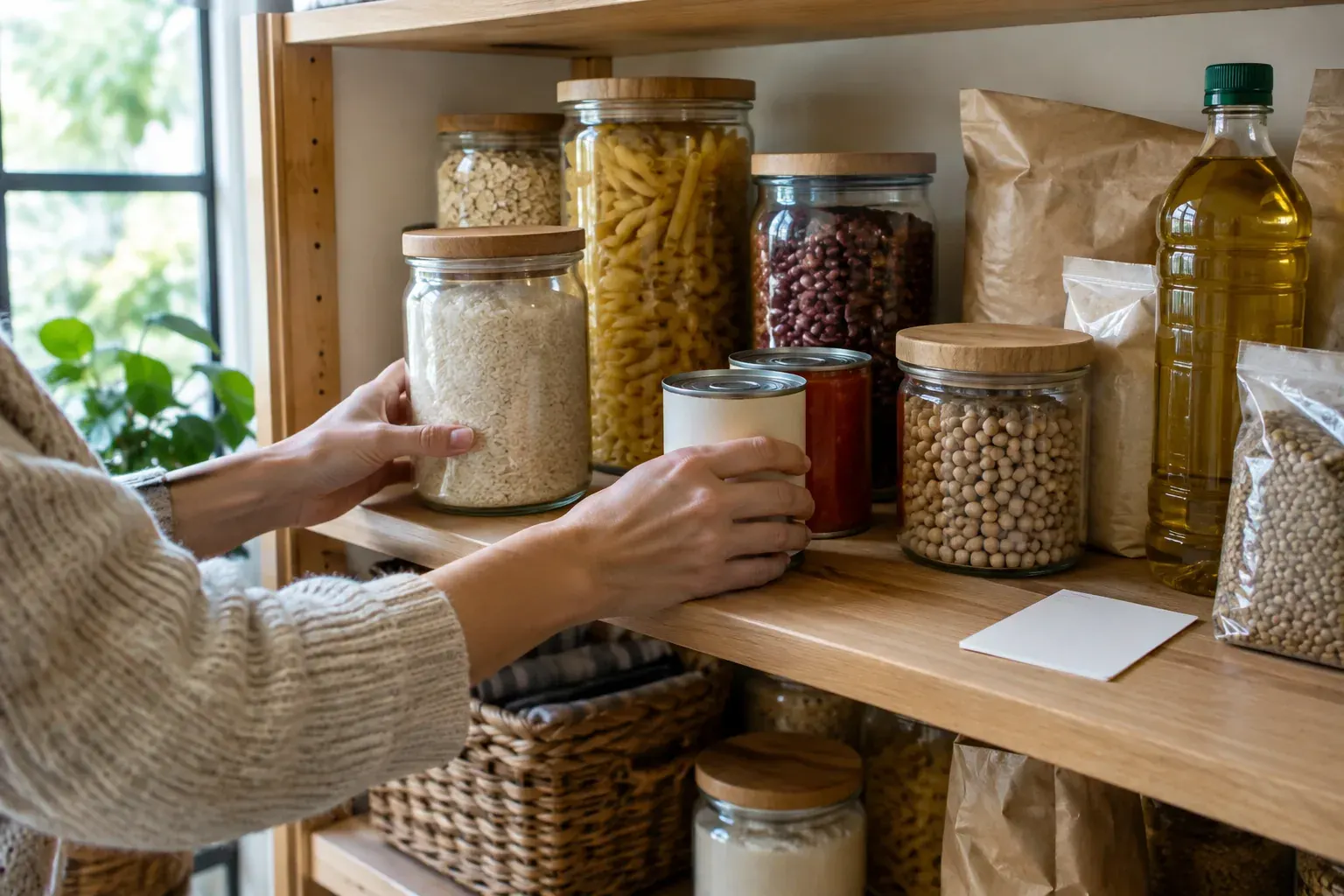
If you want fewer containers left at the end of the week, plan portions before cooking and freeze extras early. A simple system, like the one in this guide to stocking a budget-friendly pantry, can also help you build meals around what you have and avoid buying more than you can use.
The Bottom Line
Refrigerate perishable leftovers within 2 hours, or within 1 hour when it is above 90°F, and keep your refrigerator at 40°F or below. Most cooked leftovers keep for 3 to 4 days in the refrigerator.
Freeze extra portions while they are fresh, thaw them safely, and reheat them to 165°F. If food was stored too long or left out too long, throw it away rather than relying on its smell or appearance.
Frequently asked questions
Can I eat leftovers after 5 days in the fridge?
Most cooked leftovers should be used within 3 to 4 days in a refrigerator set at 40°F or below. If they have been refrigerated for 5 days, the safer choice is to discard them, even if they look and smell normal.
How long can leftovers sit out before they are unsafe?
Refrigerate perishable leftovers within 2 hours. If the temperature is above 90°F, refrigerate them within 1 hour or discard them.
Can I put warm leftovers directly in the refrigerator?
Yes. Put food away promptly rather than leaving it on the counter to cool. Divide a large pot or casserole into shallow containers so it cools more quickly.
What temperature should leftovers reach when reheated?
Reheat leftovers to 165°F, checking with a food thermometer in several spots. Stir or rotate food heated in a microwave to reduce cold spots.
Is food safe to eat if it has freezer burn?
Freezer burn usually affects quality, not safety, if the food stayed continuously frozen. The dry or discolored areas may taste unpleasant, so you can trim them or discard the food if its quality is poor.