Meal Prep for Beginners: A Simple Weekly System That Saves Time and Money
A useful meal prep routine does not require a fridge full of identical meals. Choose a style that fits your week, prep a few flexible building blocks and store them safely.
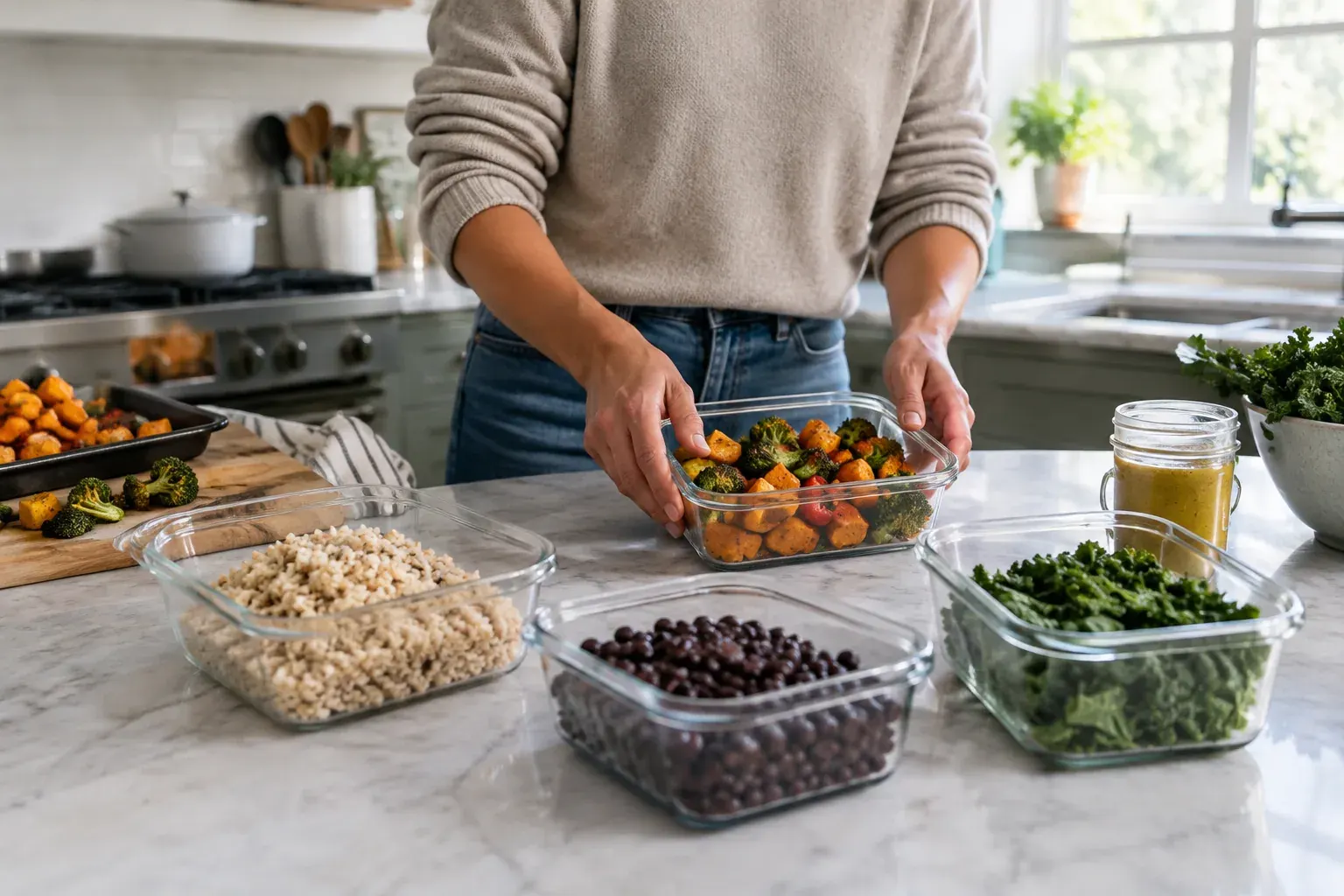
Key takeaways
- Choose a meal prep style that matches how much cooking and variety you want during the week.
- Plan meals around ingredients you already have, then shop from a short, organized list.
- Use a two-hour session to prepare a few flexible ingredients, not every meal from scratch.
- Refrigerate food promptly at 40°F or below, and freeze portions you will eat later in the week.
- Keep sauces and delicate toppings separate so meals stay appealing and easy to customize.
In this guide
Meal prep can help if you get home tired, order takeout more often than you mean to, or find yourself throwing away groceries at the end of the week. The goal is not to cook every meal in advance. It is to make a few useful choices before the busy part of your week begins.
This guide walks you through choosing a prep style, planning meals and making a shopping list. You will also find a realistic two-hour Sunday plan, a sample week and practical food safety rules for storing what you cook.
Choose a meal prep style that fits your week
Meal prep can mean different things. Pick the approach that solves your biggest problem, then adjust it as you learn what you actually eat.
- Batch cooking: Make a large pot of soup, chili, grains or another dish, then portion it for several meals. This is efficient, but eating the same dish repeatedly can get old.
- Meal assembly: Cook a few basics, such as a protein, a grain and vegetables. Combine them in different ways throughout the week.
- Ingredient prep: Wash and cut produce, cook a pot of rice, or mix a sauce, but leave the final cooking and assembly for later. This works well if you want fresher meals or have unpredictable plans.
- Grab-and-go prep: Portion breakfasts, snacks or lunches so you can take them with you. Start here if mornings or workday meals are your main challenge.
A flexible combination is often easiest: prepare one or two items in batches, prep some ingredients, and leave a couple of meals to cook fresh. For example, roasted vegetables and cooked rice can work in a bowl one day and alongside eggs or a protein the next.
Pro tip: Start with three days of food, not a full week. A smaller first session helps you learn what portions you need and what you enjoy eating again.
Plan around your schedule and shop from a list
Before choosing recipes, look at the week ahead. Note late workdays, meals away from home and nights when you have time to cook. Planning for meals you will not be home to eat is a common source of waste.
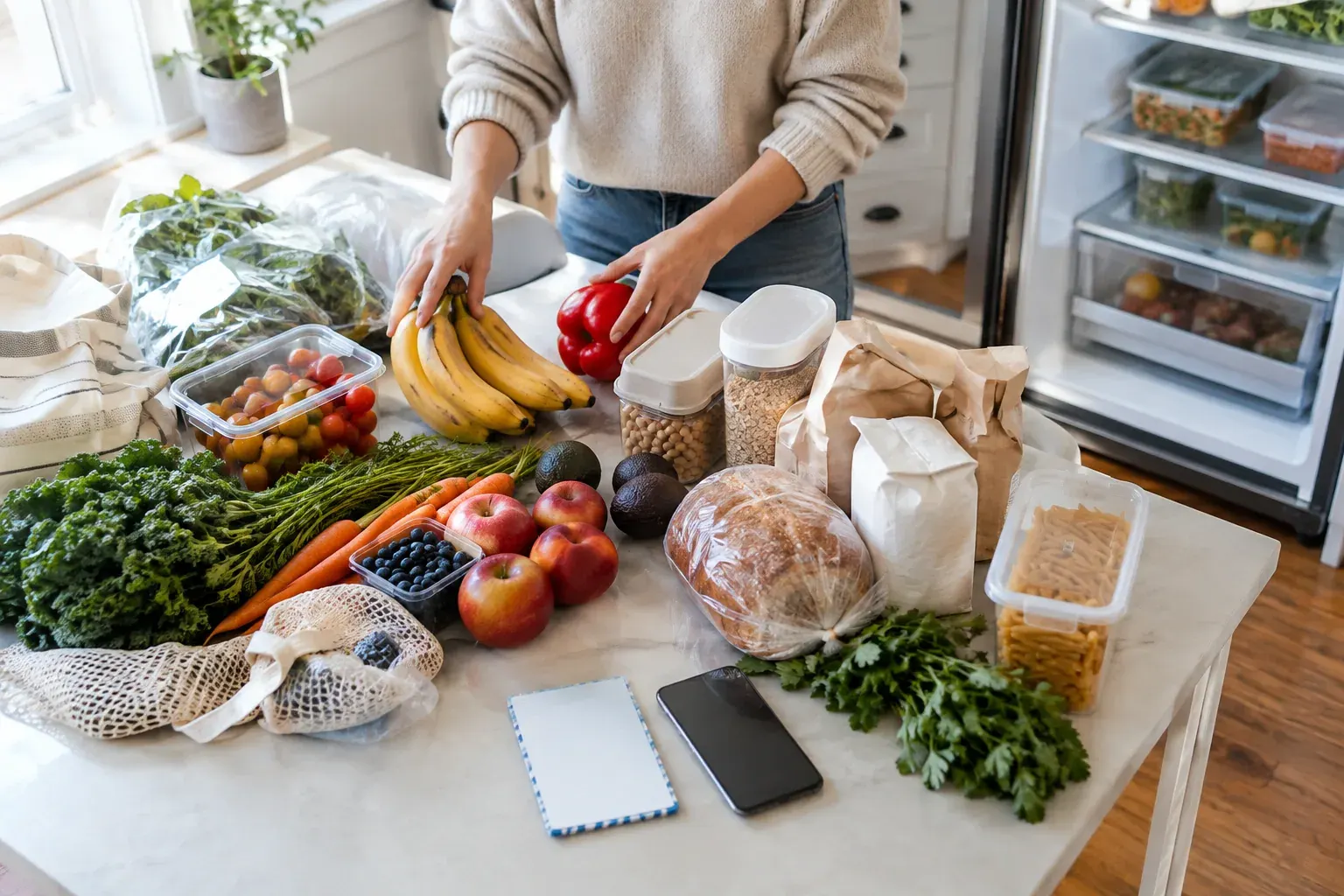
Choose a few ingredients that can be used in more than one meal. A simple formula is one or two proteins, one grain or other filling base, two vegetables, and one or two sauces or seasonings. Use fresh ingredients that spoil quickly earlier in the week, and keep sturdy or frozen ingredients for later.
Make a short, useful shopping list
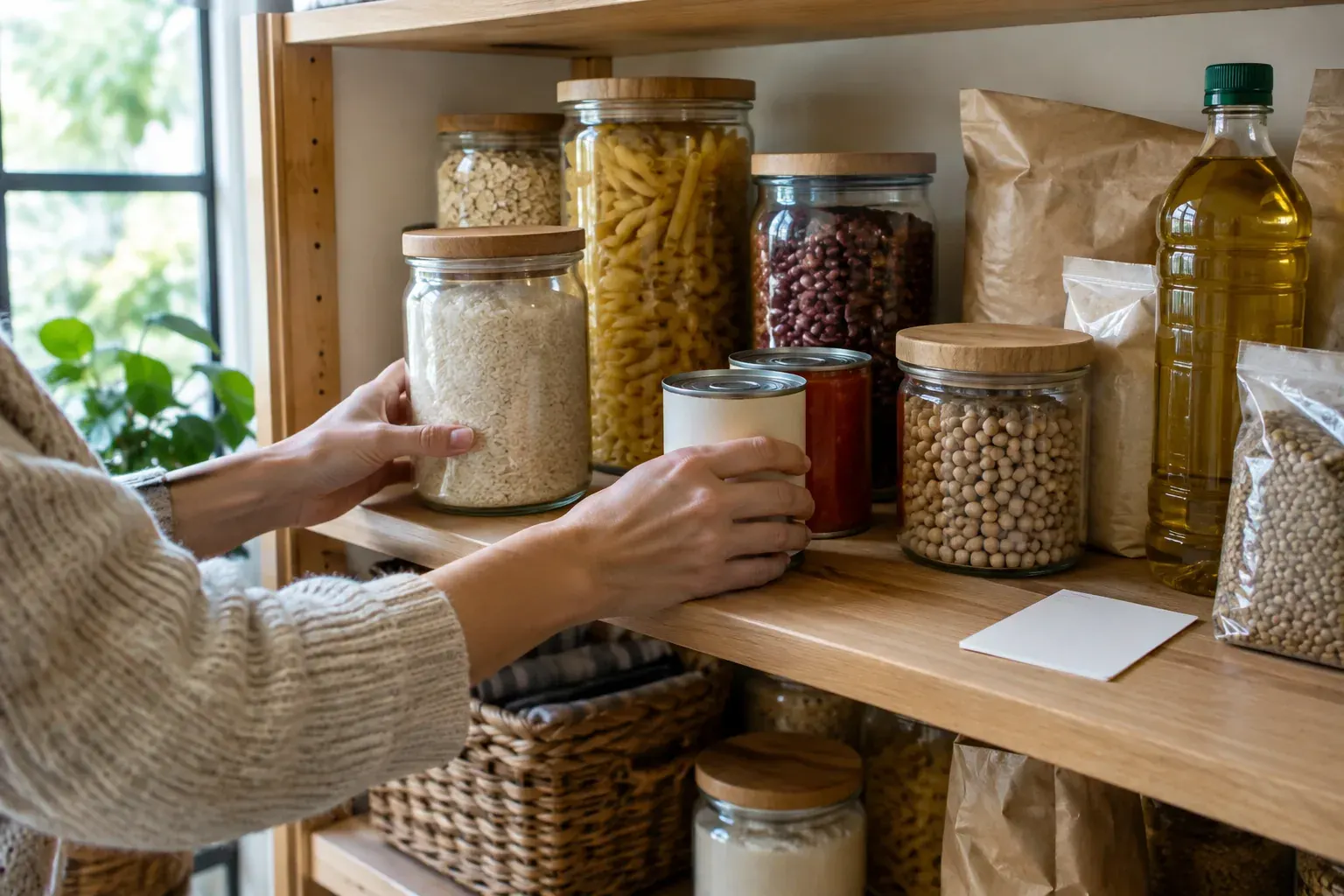
Check your refrigerator, freezer and pantry first. Then list only what your plan needs, grouped by store area so shopping is quicker:
- Produce: vegetables, fruit, herbs and salad greens
- Protein: eggs, beans, tofu, fish, poultry or meat
- Grains and starches: rice, oats, pasta, potatoes, bread or tortillas
- Dairy and refrigerated items: yogurt, cheese or milk, if needed
- Flavor: broth, salsa, spices, dressing or ingredients for a sauce
Be realistic about quantities. If a recipe uses half a bunch of herbs, decide how you will use the rest or choose a dried herb you already own. For more ways to stretch your food budget, see How to Save Money on Groceries Without Extreme Couponing and How to Stock a Budget-Friendly Pantry.
Good to know: Repeating an ingredient does not have to mean repeating the same meal. Changing the sauce, seasoning or format can turn rice, vegetables and beans into a different lunch or dinner.
Set up for a two-hour Sunday session
A two-hour session works best when you keep the menu simple and let tasks overlap. Choose recipes with compatible oven temperatures and cooking times, and use a timer so one task does not distract you from another.
Before you start, clear counter space, wash your hands and gather a cutting board, knife, sheet pan, pot, food thermometer and clean storage containers. Check that you have enough room in the refrigerator and freezer. If your kitchen is small, clean as you go and cook one component at a time.
| Time | What to do |
|---|---|
| 0 to 15 minutes | Review the plan, preheat the oven if needed, rinse produce and start a pot of grains or beans. |
| 15 to 35 minutes | Chop vegetables and prepare a protein. Put ingredients with similar cooking times on the same pan when appropriate. |
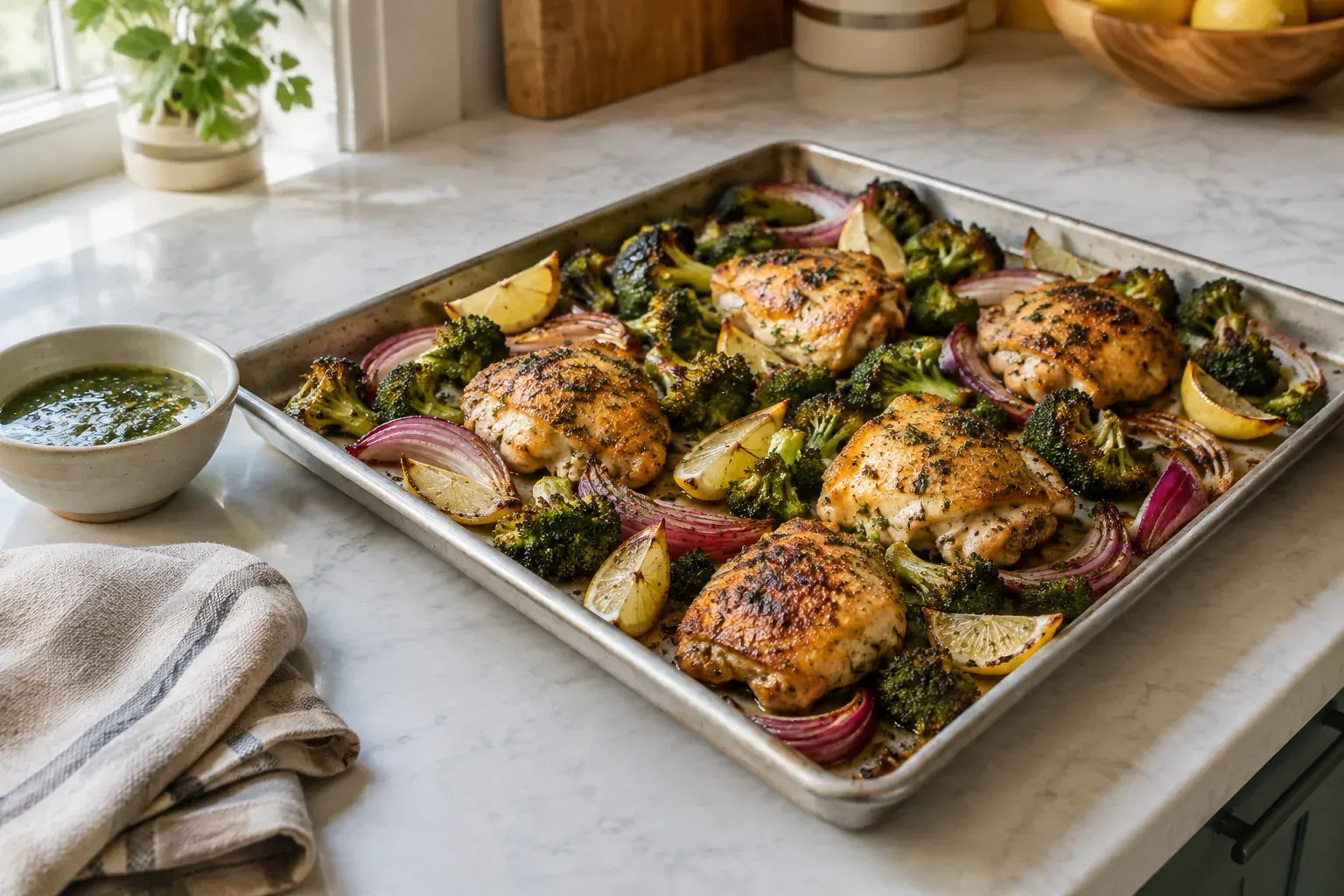
| 35 to 65 minutes | Roast or cook the protein and vegetables while the grain finishes. Make a simple sauce or dressing. |
| 65 to 90 minutes | Check that food is fully cooked, then portion or arrange components in shallow containers so they cool quickly. |
| 90 to 110 minutes | Wash remaining produce, portion snacks or breakfasts, and label freezer portions with the food and date. |
| 110 to 120 minutes | Put food away promptly, wash tools and wipe down surfaces. |
The schedule is a guide, not a reason to rush. If a protein needs more time, let it finish cooking and shorten the number of items you prepare. Use a food thermometer for foods where doneness is not easy to judge by appearance.
A sample week of flexible meals
This example uses familiar, swappable ingredients rather than a separate recipe for every meal. Adjust portions and ingredients to your appetite, dietary needs and household. Keep dressings, salsa, herbs and other toppings separate until serving.
| Day | Lunch | Dinner |
|---|---|---|
| Monday | Rice bowl with roasted vegetables, black beans and salsa | Sheet-pan chicken or tofu with vegetables and rice |
| Tuesday | Leftover chicken or tofu bowl with greens and dressing | Pasta with vegetables and white beans |
| Wednesday | Pasta salad with leftover vegetables and beans | Baked potato topped with beans, cheese or a vegetable topping |
| Thursday | Frozen portion of soup or chili, thawed safely and reheated | Fresh eggs with toast and a side of prepared vegetables |
| Friday | Frozen rice bowl components with a fresh sauce or topping | A simple meal from what remains, or a meal cooked fresh |
On Sunday, put portions intended for later in the week in the freezer rather than keeping them in the refrigerator for too long. Move a frozen portion to the refrigerator the night before you plan to eat it. If plans change, keep the food frozen until you need it, or use another safe thawing method and cook or reheat it promptly.
Think of the table as a starting point. Swap the rice for potatoes, use lentils instead of beans, or change the sauce. If you want a more structured menu with recipes and portions, Meal Prep for Beginners: A Simple Weekly System That Saves Time and Money is this guide’s topic, so do not use this link. Instead, use the sheet pan dinner formula for another flexible weeknight approach.
Choose containers and store food safely
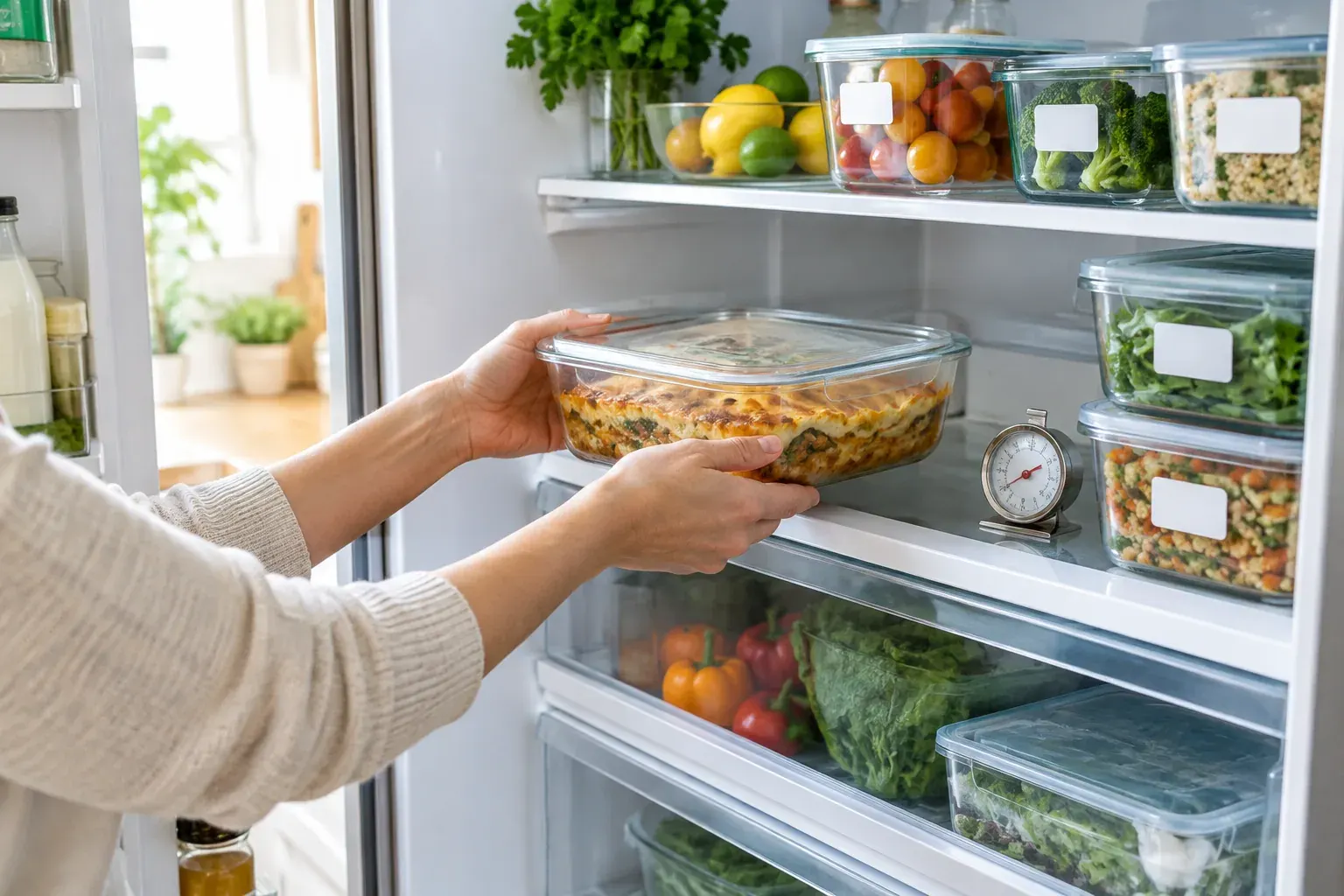
Use clean, food-safe containers with tight-fitting lids. Glass containers are durable and useful for reheating when labeled microwave-safe; food-safe plastic containers are lighter and convenient for packed lunches. Follow the container maker’s instructions for microwaving and dishwashing. Choose sizes that fit the portions you will actually eat, and use shallow containers for cooked food that needs to cool.
Food safety matters as much as the menu. Keep your refrigerator at 40°F or below, and use a refrigerator thermometer if you are unsure of its temperature. Refrigerate perishable food within two hours of cooking or serving, or within one hour when the temperature is above 90°F. Divide large batches into shallow containers and refrigerate promptly rather than leaving a pot out to cool completely.
- Keep raw meat, poultry and seafood separate from ready-to-eat food, and wash hands, utensils and surfaces after handling them.
- Cook food to a safe internal temperature. Use a food thermometer, and check USDA guidance for the specific type of meat, seafood or dish.
- Refrigerate cooked leftovers for three to four days. Freeze portions you do not expect to eat within that time.
- Thaw frozen meals in the refrigerator, in cold water, or in the microwave. If you use cold water or a microwave, cook or reheat the food promptly.
- Reheat leftovers to 165°F. Stir or rotate food in the microwave so it heats evenly, and check the temperature in more than one spot when practical.
Food that has been left out too long may not be safe even if it smells and looks fine. When you are uncertain how long a food has been stored, discard it. The USDA Food Safety and Inspection Service and the FoodKeeper resource offer food-specific storage guidance.
Safety note: People who are pregnant, adults 65 and older, children under 5, and people with weakened immune systems are at higher risk of serious foodborne illness. Follow safe handling advice closely, and ask a doctor or dietitian for guidance if you have specific dietary or health concerns.
For a more detailed guide to refrigerated and frozen leftovers, see How Long Do Leftovers Last? A Practical Fridge and Freezer Guide.
Keep meals interesting without making more work
Variety comes from small finishing touches, not necessarily from cooking a new main dish every night. Store sauces separately and add them just before eating. Keep crunchy ingredients, such as nuts, seeds or croutons, apart from wet foods, and add fresh herbs or greens at serving time.
Try these changes to reuse a base without making meals feel identical:
- Switch between a grain bowl, a wrap, a salad and a baked potato topping.
- Change flavor with salsa, vinaigrette, curry seasoning, lemon, hot sauce or a yogurt-based sauce.
- Add a different protein, such as eggs, beans or tofu, when you want a change from meat.
- Use frozen vegetables when fresh produce runs low, and add them during cooking rather than storing them in a finished meal if you prefer a firmer texture.
If you do not like eating leftovers several days in a row, freeze individual portions or prepare ingredients instead of complete meals. You can also plan one or two no-cook meals, such as a sandwich, yogurt with fruit, or a salad assembled from prepared ingredients.
Common meal prep mistakes to avoid
- Making too much too soon: A big batch can become tiring. Begin with a few meals and adjust after you see what gets eaten.
- Planning every meal as a recipe: Too many ingredients and steps make prep harder. Reuse a short list of basics and vary the finishing touches.
- Keeping the whole batch in the fridge all week: Cooked leftovers generally keep three to four days refrigerated. Freeze portions intended for later.
- Leaving food on the counter to cool: Portion food into shallow containers and refrigerate it promptly.
- Packing lunches while food is still hot in a deep container: Large, dense portions cool slowly. Use shallow containers, and avoid crowding the refrigerator so cold air can circulate.
- Forgetting to label the freezer: Mark containers with what is inside and the date you froze them. Rotate older portions forward and use them while quality is good.
- Ignoring what you already have: Check your pantry and freezer before shopping. A plan that uses existing ingredients can reduce duplicate purchases and waste.
The best routine is one you can repeat. If two hours feels like too much, prep one protein and one vegetable, or wash and portion the ingredients that usually slow you down. A small amount of preparation can still make weekday meals easier.
The Bottom Line
Meal prep for beginners is easiest when you choose a style that fits your schedule, plan a few flexible meals and shop from a focused list. Use a short Sunday session to prepare building blocks, then vary the seasonings and formats during the week.
Store food promptly in shallow containers, keep the refrigerator at 40°F or below, and freeze portions you will not eat within three to four days. Start small, pay attention to what you actually use, and let that guide next week’s plan.
Frequently asked questions
How many days of meals should a beginner prep at once?
Start with two or three days so you can learn which portions and meals work for you. Cooked leftovers generally keep three to four days in the refrigerator, so freeze portions meant for later.
Is Sunday meal prep safe to eat all week?
Not if you keep every cooked meal refrigerated until the end of the week. Refrigerate cooked leftovers for three to four days and freeze portions you plan to eat after that.
What containers are best for meal prep?
Use clean, food-safe containers with tight-fitting lids. Shallow containers help cooked food cool quickly, and you should follow the manufacturer's instructions before microwaving glass or plastic.
How long can meal-prepped food sit out?
Refrigerate perishable food within two hours, or within one hour when the temperature is above 90°F. Do not rely on smell or appearance to decide whether food left out too long is safe.
How do I keep meal prep from getting boring?
Prepare flexible basics and change the sauce, seasoning, toppings or format. For example, use the same vegetables and grain in a bowl one day and a wrap or salad the next.