How to Organize a Small Apartment: Storage Ideas That Work
A small apartment can feel more spacious when every item has a sensible home. Start with what you own, then add storage that fits your rooms, routines, and lease.
Key takeaways
- Declutter before buying organizers, so you store only what you use or value.
- Measure rooms and belongings before choosing shelves, bins, or furniture.
- Use wall height, doors, and the space under furniture without blocking walkways.
- Create simple, separate systems for your closet, kitchen, and entryway.
- Check your lease and product instructions before mounting anything or loading shelves.
In this guide
- 1. Declutter before you buy storage
- 2. Measure the space and give items a home
- 3. Use vertical storage without crowding the room
- 4. Choose furniture that earns its footprint
- 5. Build simple systems for the closet, kitchen, and entryway
- 6. Make renter-friendly choices that protect the apartment
- 7. Maintain the system with small resets
- Common mistakes to avoid
- The Bottom Line
A small apartment can be hard to organize when closets are shallow, counters are limited, or everyday items have nowhere to land. Buying bins before you know what needs storing often adds clutter instead of solving it.
This guide gives you a practical order of operations: reduce what you do not need, assign homes to what remains, and choose storage that fits your space. You will also find renter-friendly ideas and a simple way to keep the system working after the initial cleanup.
1. Declutter before you buy storage
Storage works best when it holds things you actually use. Start with one small area, such as a single drawer, one shelf, or the top of a dresser. Empty it, wipe it down, and sort items into keep, donate or give away, recycle, and discard groups.
Use a few questions to make decisions:
- Have I used this in the past year, or is there a clear reason I will need it soon?
- Do I own another item that does the same job?
- Would I choose to keep this if I had to find a place for it today?
- Is it in usable condition, and does it belong in this apartment?
You do not have to discard seasonal gear or important keepsakes just because you do not use them every week. Instead, decide how much space you can reasonably give each category. If you are unsure about a nonessential item, put it in a dated box and review it after a set period. Keep the box somewhere you can reach, not buried behind other things.
Avoid turning donation bags into permanent hallway storage. Set aside a short time to take usable goods to a suitable donation location, and follow local rules for recycling and disposal. If an item is broken, stained, or unsafe, do not pass it on as a donation.
Pro tip: Declutter by category when you can. Gathering all your mugs, cables, or cleaning products in one place makes duplicates easier to spot than sorting one random drawer at a time.
2. Measure the space and give items a home
Before you shop, measure the place where storage will go. Note width, height, and depth, plus the clearance needed for doors, drawers, vents, and walkways. Measure the item you want to store too. A bin that looks right online may not fit a closet shelf or slide beneath your bed.
Make a quick inventory of the apartment’s underused areas: the wall above a desk, the back of a closet door, the space beneath a bed, or a narrow gap beside a cabinet. Check how you use each spot before assigning it a purpose. A storage area that requires moving three other things every day is unlikely to stay organized.
| Storage problem | First place to look | Useful approach |
|---|---|---|
| Coats and bags pile up by the door | Wall, door, or narrow floor area | A small rack, hooks allowed by your lease, or one basket for bags |
| Kitchen counters collect tools | Cabinet interiors and wall height | Group tools by task and store daily-use items within reach |
| Clothes overflow the closet | Under-bed space and the closet’s full height | Seasonal containers, shelf dividers, or a second hanging level if it fits |
| Cleaning supplies are scattered | One cabinet or a designated caddy | Keep related products together and away from food and children |
| Paper and small items spread across surfaces | One drawer, tray, or lidded box | Create a single drop zone and sort it regularly |
Give each category a clear home, and keep the home close to where you use the item. Store everyday dishes near the kitchen workspace, shoes near the exit, and spare linens near the bed. Label containers if their contents are not obvious, but do not label everything just for the sake of it.
3. Use vertical storage without crowding the room
Look up before adding another piece of furniture. Tall shelving, wall-mounted shelves where permitted, over-door organizers, and stackable containers can use space that would otherwise sit empty. Keep frequently used items between waist and eye level; reserve high shelves for light, occasional-use items.
A few ways to use height well:
- Add a second shelf inside a tall closet if there is enough clearance for the items below it.
- Use a hanging organizer for lightweight clothing or accessories, provided the closet rod can support the load.
- Store matching or similar-size containers on top of a sturdy cabinet, with heavy items kept lower.
- Use the backs of cabinet doors for small, light items when the door still closes freely.
- Put books or frequently handled objects on lower shelves, where they are easier and safer to reach.
Vertical storage can make a room feel busier if every wall is covered. Choose a few useful zones and leave some open space. Keep windows, heating and cooling equipment, electrical panels, smoke alarms, sprinkler heads, and exits clear. Do not climb on chairs or unstable furniture to reach high shelves; use a stable step stool and ask for help with awkward loads.
For tall furniture, follow the manufacturer’s assembly and anchoring instructions. If anchoring would require drilling, ask your landlord or property manager about an approved option. If you cannot safely secure a tall unit, choose a shorter, stable piece and store heavier objects near the bottom.
4. Choose furniture that earns its footprint
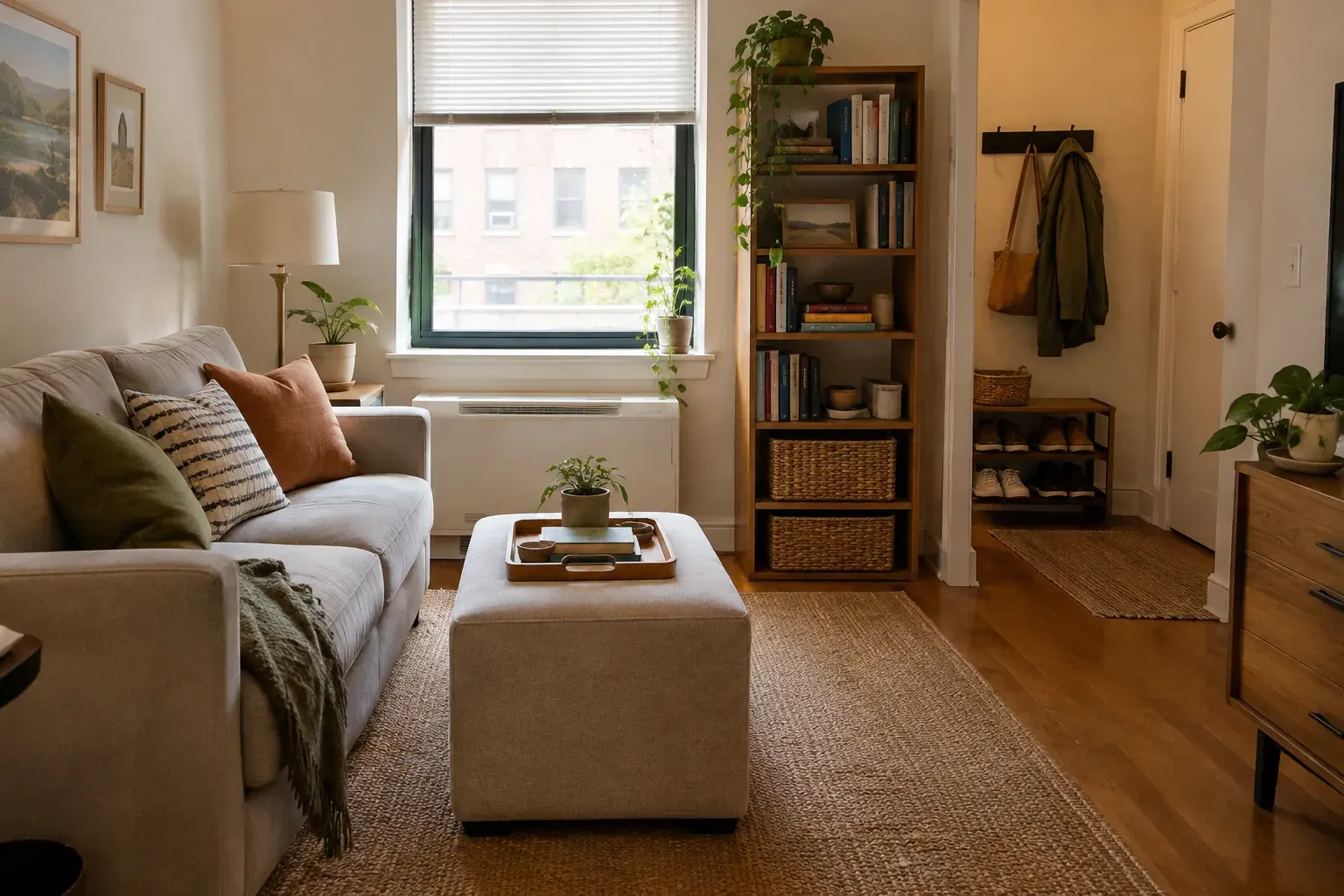
In a small apartment, each large piece should do more than one job when possible. A storage ottoman can hold blankets and serve as seating. A bed with drawers or open clearance underneath can store linens or off-season clothes. A folding table can provide a work surface or dining space, then tuck away when it is not needed.
Before choosing multi-use furniture, check the measurements in both its open and closed positions. A fold-out desk is only useful if you can still pull out a chair. A storage bench may be convenient, but it should not block the front door or a clear path through the room.
Think about what you need to access often. A deep storage couch can hide a lot, but it is a poor home for items you reach for every day. Store spare bedding, seasonal accessories, or extra supplies in harder-to-reach compartments. Keep daily essentials in an open basket, drawer, or shelf that takes little effort to use.
Good to know: Multi-use does not have to mean buying new furniture. A sturdy table can work as a desk and dining surface, while a lidded box can double as a side table if it is stable and the contents are not needed often.
5. Build simple systems for the closet, kitchen, and entryway
The best system is one you can use without rearranging the room every time. Keep each zone focused on a few related tasks, and avoid filling every inch just because you can.
Closet
Start by grouping clothes by type, then separate daily wear from occasional or seasonal items. Put the clothes you reach for most at a convenient height. Use matching hangers only if they help clothes fit or make the closet easier to scan; buying a full set is not a requirement.
Use shelf dividers, small bins, or drawer organizers only where loose items tend to topple or get mixed together. Keep shoes in pairs and store less-used pairs higher or under the bed. Before adding another rod or hanging organizer, check that clothing will not drag on the floor or prevent the closet door from closing.
Kitchen
Group items by task: coffee or tea supplies together, cooking tools near the stove, and food storage containers near the area where you pack leftovers. Stack pots and pans by size if doing so is safe and easy to lift, and keep heavy cookware on lower shelves. Use a shelf riser or a turntable only if it improves access without making the cabinet difficult to close.
Keep the counter for tasks you do often, not as a holding space for every appliance. If you cook regularly, leave out the tools you use most and store occasional appliances in a cabinet. For a deeper reset, use the steps in How to Deep Clean Your Kitchen. If pantry food is taking over your shelves, How to Stock a Budget-Friendly Pantry can help you focus on useful staples rather than excess packages.
Store food in clean, suitable containers and keep it away from household chemicals. Check dates and condition as you organize, and follow package instructions for storage. A small bin for snacks or baking supplies can keep a category together, but leave room to see what you have so food is not forgotten.
Entryway
Even a small entry can have a clear routine. Choose one landing spot for keys and mail, one place for shoes, and a hook or rack for the coat or bag you use most. A shallow tray or wall shelf can work where a table would block the path.
Keep the floor clear enough to open the door and walk through safely. If there is no coat closet, store only current-season outerwear near the entrance and move the rest to a closet or under-bed container. Sort mail often, and shred or recycle papers you do not need rather than letting the entry tray become a second filing cabinet.
6. Make renter-friendly choices that protect the apartment
Start with your lease and any building rules. Ask for written permission before drilling, installing heavy shelving, changing hardware, or making another alteration. Rules and expectations vary by property, and an item sold as removable can still damage paint or leave residue.
Options that may avoid permanent changes include freestanding shelves, tension rods, over-door organizers, removable hooks, and furniture with built-in storage. They still need to fit the space and be used as directed. Check door clearance, surface compatibility, and product weight limits. Do not use a light-duty adhesive hook to hold a heavy object, especially over a bed, crib, or walkway.
A few habits can reduce the chance of damage:
- Read the lease and product instructions before installing anything.
- Check the condition and type of the surface. Test a removable product in an inconspicuous spot if its instructions allow it.
- Use only the stated load limit, and account for the weight of the item and everything stored in it.
- Remove temporary fixtures as directed, rather than pulling them off quickly.
- Photograph the area before and after changes if you need a record of its condition.
No storage method can guarantee that you will get your full security deposit back. If you are uncertain about a change, ask the property manager before you install it. Keep fire exits, hallways, and shared areas clear, and do not place belongings where they could block a door or emergency equipment.
7. Maintain the system with small resets
Organization is not a one-time project. It stays useful when putting things away is easier than leaving them out. Once a week, take a few minutes to return items to their homes, clear the entryway, and check the surfaces that tend to collect clutter.
When you bring something new into the apartment, decide where it will live before you unpack it. If the designated space is full, consider whether something can be used up, donated, recycled, or stored elsewhere. Avoid responding to every crowded shelf by buying another bin. More containers can hide the underlying problem without making the space easier to use.
Review seasonal storage when the weather or your routine changes. Move current-season items to convenient locations and keep the rest contained and labeled. If a storage spot repeatedly gets messy, adjust the system: make the container easier to reach, reduce the number of steps, or choose a simpler home for the items.
Common mistakes to avoid
Buying organizers before sorting. You may end up with containers that do not fit or that store things you no longer need. Sort first, measure second, then buy only what solves a specific problem.
Filling every available gap. A packed room is harder to clean and move through. Leave practical clearance around doors, windows, appliances, and walkways.
Storing daily items out of reach. If you have to move a stack or open several boxes for an everyday item, you are likely to leave it out. Keep frequent-use items accessible and reserve deep storage for things you rarely need.
Putting too much weight overhead. Heavy objects are harder to lift and can fall if a shelf or attachment is not rated for the load. Keep heavy items low, follow installation instructions, and avoid unstable or improvised mounts.
Treating the entryway as overflow. Bags, shoes, packages, and mail can quickly block the door. Set a small limit for each category and clear the area as part of your weekly reset.
The Bottom Line
To organize a small apartment, begin by removing what you do not need, then measure the space and give remaining items convenient homes. Use vertical areas and multi-use furniture selectively, with everyday items easy to reach and heavy items kept low.
Choose renter-friendly storage only after checking your lease, surfaces, and product limits. A brief weekly reset and a willingness to adjust awkward systems will help your apartment stay functional without turning every open space into storage.
Frequently asked questions
How do I start organizing a small apartment?
Start with one small area and sort its contents into keep, donate, recycle, and discard groups. Then measure the space and choose a home for the items you are keeping before buying organizers.
What is the best way to add storage in a small apartment?
Use under-bed space, the full height of closets, and a few well-chosen vertical storage areas. Keep walkways and exits clear, and put heavy or frequently used items where they are easy and safe to reach.
How can I add storage without damaging a rental?
Check your lease and ask your landlord or property manager before drilling or making permanent changes. Freestanding furniture, tension rods, and removable organizers may work, but follow instructions and know that removable products can still affect some surfaces.
How do I organize a small apartment kitchen?
Group items by task, keep daily-use tools near where you use them, and store heavy cookware on lower shelves. Clear the counter of appliances you rarely use and keep food visible enough to avoid forgetting it.
How do I keep a small apartment organized?
Give commonly used items an easy-to-reach home and return them there as part of a short weekly reset. When a spot keeps getting cluttered, simplify the system or reduce what you store there instead of adding more containers.