How to Choose a Fresh Real Christmas Tree and Keep It Green, Safe and Watered Until After New Year's
A real tree can stay green and fragrant for four to five weeks or turn brittle in ten days. The difference comes down to freshness, a fresh cut and water every day.
Key takeaways
- Test freshness before you pay: green needles should bend and stay put when you run a hand along a branch.
- Firs such as Fraser, noble and Nordmann hold their needles longest indoors; spruces tend to drop them sooner.
- Cut about 1 inch off the trunk right before setup and get the tree into water within a few hours.
- Use a stand that holds about 1 quart of water per inch of trunk diameter and never let the level drop below the cut.
- Keep the tree at least 3 feet from heat sources and take it down once it turns dry and brittle.
In this guide
- Decide When and Where to Buy
- Pick the Right Species for Your Home
- Measure Before You Leave Home
- Test Freshness Before You Pay
- Set Up the Tree the Right Way
- Water Every Day and Watch for Warning Signs
- Keep Your Tree Fire-Safe
- Make It Safe for Pets and Kids
- Common Mistakes to Avoid
- Take It Down and Dispose of It Responsibly
- The Bottom Line
A real Christmas tree is one of the few decorations that changes the whole feel of a room: the scent, the uneven branches, the trip to pick it out. It is also a living thing that starts drying out the moment it is cut, which is why some trees stay green past New Year’s while others shed a carpet of needles by mid-December.
The good news is that keeping a tree fresh is not complicated. It depends on a few decisions you make at the lot or farm and a few habits once the tree is home. This guide walks you through choosing the species and size, testing freshness, setting it up, watering, fire safety, pets and getting rid of the tree in January.
Decide When and Where to Buy
Timing matters more than most people think. Many precut trees sold on lots and at big-box stores were harvested in late October or early November and trucked in from growing regions such as North Carolina, Oregon, Michigan and Pennsylvania. By the time you buy one after Thanksgiving, it may already have been cut for several weeks.
A well-cared-for tree usually looks good indoors for about four to five weeks. Work backward from the date you want it to last:
- Want it through New Year’s? Buy a precut tree in the first week or two of December, or cut your own any time after Thanksgiving.
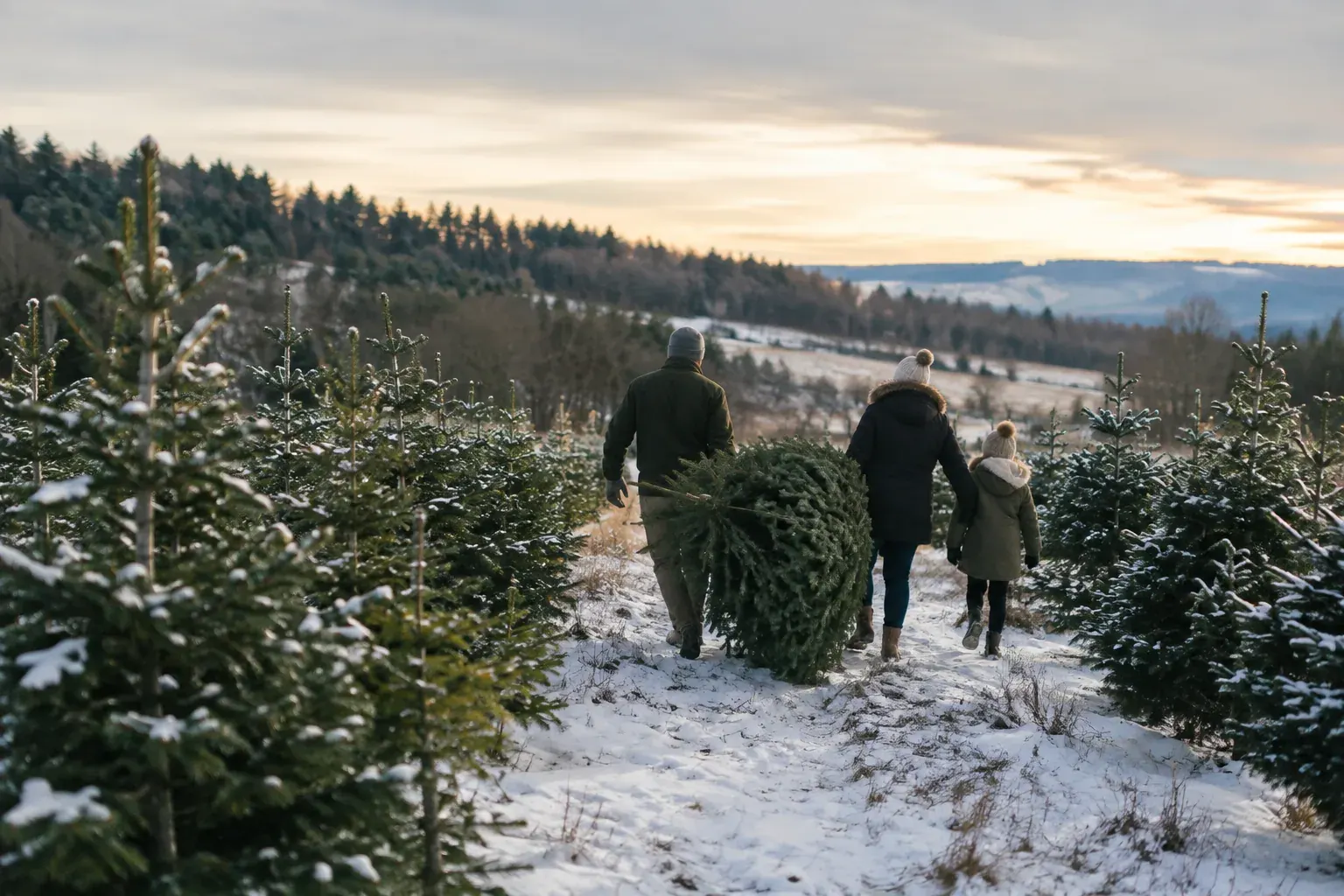
- Decorating Thanksgiving weekend? A choose-and-cut farm is your best bet, because the tree goes from field to stand in a day.
Where to get a tree
| Source | Freshness | Typical trade-offs |
|---|---|---|
| Choose-and-cut farm | Highest: cut the day you buy | Drive and time, muddy fields, sometimes fewer large sizes |
| Precut at a local farm stand or nonprofit lot | Varies: ask when the trees arrived | Often good selection, support local groups |
| Big-box store or supermarket | Lowest on average | Convenient and often cheaper, trees may sit wrapped or in the sun |
| National forest permit | Fresh, you cut it yourself | Inexpensive permit, but long drives, snow and limited species and shapes |
Several national forests sell Christmas tree permits each season through the US Forest Service, often for a small fee, with rules on species, height and where you can cut. Fourth graders can often get a free permit through the federal Every Kid Outdoors program. Check the current rules with the specific forest before you go.
Prices vary by region, species and height. As a rough guide, a 6 to 7 foot tree often costs somewhere between $75 and $150, with premium firs and tall trees costing more. Add a sturdy stand if you need one, and set the total inside your holiday budget so it does not become a surprise.
Pick the Right Species for Your Home
Each species looks, smells and behaves differently once it is inside a warm house. Needle retention and branch strength matter most if you have heavy ornaments or want the tree up for a long time.
| Species | Needle retention | Branches | Scent | Good to know |
|---|---|---|---|---|
| Fraser fir | Excellent | Firm, upturned | Pleasant, moderate | The classic premium choice; handles heavy ornaments |
| Noble fir | Excellent | Very stiff, spaced tiers | Mild | Common in the West; great for showing off ornaments |
| Nordmann fir | Excellent | Strong, layered | Light | Glossy dark needles; few needles on the floor |
| Balsam fir | Very good | Medium | Strong, classic | Popular in the Northeast and upper Midwest |
| Concolor (white) fir | Very good | Medium | Citrus-like | Soft blue-green needles |
| Douglas fir | Good | Softer, can droop | Sweet | Widely available and often less expensive |
| Scotch pine | Very good, even when dry | Stiff | Light | Needles are prickly; watch water closely since it hides dryness |
| White pine | Good | Flexible, weak | Faint | Soft needles; best with light ornaments |
| Blue spruce | Fair | Very stiff | Mild | Sharp needles and faster drop in warm rooms |
| Leyland cypress | Good | Feathery | Almost none | Popular in the South; may suit people sensitive to scent |
For a five-week run, stick with a fir. For big fragrance, choose balsam or concolor. With a toddler who grabs branches, skip spruce and Scotch pine.
Measure Before You Leave Home
The most common Christmas tree mistake has nothing to do with freshness. It is buying a tree that does not fit.
- Measure ceiling height. Subtract the height of your stand (often 6 to 12 inches with the trunk inside) and the tree topper, then leave at least 6 inches of clearance. In a room with an 8 foot ceiling, a 6.5 to 7 foot tree is usually the maximum.
- Measure floor space. Trees on a lot look narrower than they are. A 7 foot fir is commonly 4 to 5 feet wide at the bottom. Mark the circle on your floor with painter’s tape if you are not sure.
- Measure the stand opening. Note the largest trunk diameter your stand accepts. Many basic stands top out around 4 to 5 inches, which is too small for some 8 foot trees.
- Check your car. Bring rope or ratchet straps and an old blanket to protect the roof. Ask the lot to net the tree, which makes it easier to carry and fit through doors.
Tie the tree to a roof rack with the trunk facing forward so wind does not peel branches backward.
Test Freshness Before You Pay
Whether you buy precut or cut your own, a few quick checks tell you a lot.
- The hand test. Gently grasp a branch near the tip and pull it toward you. A few needles may come off, but if many drop, walk away.
- The bend test. Fir and spruce needles should bend without snapping. Brittle needles that break cleanly mean the tree is drying out.
- The bounce test. Lift the tree a few inches and drop the trunk on the ground. Some brown needles from inside the tree are normal, since trees shed old inner needles. A shower of green outer needles is a bad sign.
- Color and smell. Look for deep, even color with no gray or dull patches, and a clear scent when you crush a needle.
- The trunk. The base should feel slightly sticky with sap. It should also be straight for the bottom 6 to 8 inches so it sits upright in the stand.
Ask the seller when the trees arrived and how they have been stored. Good lots keep trees in shade, out of wind, and standing in water or on wet ground.
Good to know: Many lots will make a fresh cut on the trunk for you. That cut helps only if the tree reaches water within a few hours, so ask for it just before you leave, not before you go shopping elsewhere.
Set Up the Tree the Right Way
How you handle the first day has the biggest effect on how long the tree lasts.
Make a fresh cut
Within a few hours of cutting, sap seals the end of the trunk and blocks water uptake. Unless the tree was cut within the past several hours (often cited as 6 to 8), saw a straight, flat disk about 1 inch thick off the base right before it goes in the stand. Do not cut a V, drill holes in the trunk or shave off bark to make it fit. These do not help the tree drink, and shaving removes the layers that carry the most water.
If you cannot bring the tree inside the same day, make the fresh cut, set it in a bucket of water and keep it in a cool, shaded spot such as an unheated garage or a shady porch.
Choose a stand that holds enough water
A fresh tree can drink a surprising amount in its first days, sometimes a gallon or more per day. The usual rule is a stand that holds about 1 quart of water for each inch of trunk diameter. A trunk 5 inches across needs a stand that holds at least 5 quarts, a little over a gallon.
Tighten the screws evenly so the tree stands straight. A stand with a wide base is worth the extra cost for tall trees, homes with pets and anyone with small children.
Pick the spot
Set the tree where it is stable, out of main walkways and away from anything that heats or dries it: fireplaces, wood stoves, space heaters, heating vents, radiators and sunny windows. Lowering the thermostat a few degrees and running a humidifier in the room also slows drying.
Water Every Day and Watch for Warning Signs
A cut tree has no roots, so the stand is its only water source. Plain tap water is all it needs. Sugar, aspirin, bleach, soda and most homemade “tree food” recipes do not extend freshness, and some reduce how much water the tree takes up.
- Check the level every day, twice a day for the first week. Many trees drink the most in the first few days.
- Keep the water above the cut end at all times. If it drops below the base, sap can seal the trunk within hours, and the tree may stop drinking even after you refill it.
- Track how much it drinks. Water use that slows over the season is normal. A sudden stop, especially in the first week, usually means the cut has sealed.
If the tree stops drinking early, take it out of the stand, cut another inch off the base and set it back up. It is a hassle once decorated, which is why daily checks matter.
Pro tip: Set a recurring phone reminder for the same time each day, such as right after breakfast. A tree rarely dries out because someone did not care; it dries out because everyone assumed someone else filled it.
Keep Your Tree Fire-Safe
A well-watered tree is hard to ignite. A dry one can be fully engulfed in seconds. Fire safety guidance from the National Fire Protection Association and the US Consumer Product Safety Commission comes down to a few rules:
- Keep the tree at least 3 feet from any heat source, including fireplaces, radiators, space heaters, candles and heat vents. The same goes for any stocking or garland near the hearth, which ties in with the fire safety steps in our fall home maintenance checklist.
- Use lights labeled by a recognized testing laboratory, and indoor lights for indoor use. Throw out strings with cracked sockets, frayed wires or loose connections.
- Follow the manufacturer’s limit on how many light strings you connect end to end. LED lights run cooler and use far less power than older incandescent strings.
- Turn off tree lights when you go to bed or leave the house. A timer makes this automatic.
- Never use lit candles on or near a tree.
- Make sure smoke alarms work and that the tree does not block a door or escape route.
Safety note: If needles break off when you brush them or the branches feel crisp, the tree has become a fire hazard. Take it down and get it out of the house, even if it is earlier than you planned.
Make It Safe for Pets and Kids
Trees and curious animals can coexist with a little planning.
- Anchor the tree. Tie the trunk to a hook in the wall or ceiling with clear fishing line if you have a climbing cat or a large dog with a strong tail.
- Cover the water. Stand water can collect sap and bacteria. Keep pets from drinking it with a stand cover or a tree skirt tucked around the base.
- Skip tinsel with cats. Swallowed tinsel and ribbon can cause serious intestinal blockages that need emergency surgery.
- Hang breakables high. Put glass ornaments and ornament hooks out of reach of small children and pets, and keep shatterproof ornaments on the lower branches.
- Watch for chewing. Fir and pine needles can irritate a pet’s mouth and stomach, and cords are a shock hazard. Cord covers help, and so does a firm “leave it.”
If your home also has holiday plants such as poinsettias, mistletoe or lilies, check the same pet safety basics covered in our guide to easy houseplants for beginners. Call your veterinarian or an animal poison control line if a pet eats something worrying.
Common Mistakes to Avoid
- Buying the tree too early. A precut tree bought before Thanksgiving may be fading by Christmas.
- Skipping the fresh cut. Setting a tree in the stand without recutting is the most common reason it never drinks.
- Letting the stand run dry. Even one dry night can seal the trunk.
- Using a stand that is too small. A shallow reservoir can empty in a few hours during the first days.
- Trimming the trunk to fit. Shaving bark to squeeze into the stand removes the tissue that carries water. Buy a bigger stand instead.
- Placing the tree by a heat vent or fireplace. Heat dries it fast and raises the fire risk.
- Leaving lights on overnight. Turn them off when no one is awake to watch.
- Keeping a dry tree up for one more party. Once it is brittle, it is time to go.
Take It Down and Dispose of It Responsibly
Most cities and towns collect trees curbside or at drop-off sites for a few weeks after the holidays, usually in early to mid January, and turn them into mulch or compost. Check your local public works or sanitation department for dates and rules.
Before it leaves the house, remove every light, hook, ornament and strand of tinsel, since metal and plastic contaminate the mulch. Many programs do not accept trees in plastic bags or flocked trees, so confirm before you set one out. A tree removal bag laid under the stand when you set up makes carrying it out much cleaner.
Other options include using cut branches as winter mulch over perennial beds or setting the tree in the yard as shelter for birds. Never burn it in a fireplace or wood stove.
The Bottom Line
A fresh real Christmas tree starts at the lot or farm: buy at the right time, choose a species that suits your home, measure carefully and test the needles before you pay. At home, a fresh 1 inch cut, a stand that holds plenty of water and a daily check of the water level do almost all the work.
Keep it at least 3 feet from heat, turn the lights off at night and take it down as soon as it turns brittle. Do those things and your tree should stay green, fragrant and safe well past New Year’s.
Frequently asked questions
How long does a real Christmas tree last indoors?
A tree that was fresh when you bought it and gets water every day usually looks good for about four to five weeks. A tree that sat on a lot for weeks, or one that runs dry even once, can fade in two. If you want it to last through New Year's, buy in early December or cut your own after Thanksgiving.
Should I add sugar, aspirin or a commercial preservative to the water?
Plain tap water is all a cut tree needs. Sugar, aspirin, bleach and soda do not keep a tree fresher, and some mixtures can actually reduce how much water it takes up. What matters is a fresh cut, a large stand and a reservoir that never runs dry.
What if the stand ran dry overnight?
Refill it right away and watch whether the level drops over the next day. If the tree is drinking again, you are fine. If the water level stays the same, sap has likely sealed the cut, and the only fix is to take the tree out of the stand, cut another inch off the base and set it back up.
Which Christmas tree is best if I have allergies?
Some people react to the scent, sap or mold that can travel in on a tree rather than to pollen. Low-fragrance trees such as white pine or Leyland cypress may bother you less, and shaking and hosing the tree outdoors, then letting it dry, removes some dust and mold. If symptoms are severe, an artificial tree may be the better choice, and an allergist can help sort out the cause.
Can I burn my Christmas tree in the fireplace when I take it down?
No. Dry evergreen branches flare up fast and can send burning debris up the chimney, and the resin adds to creosote buildup. Use your city's curbside pickup or a drop-off site that turns trees into mulch instead.