Windsurf Slalom Racing Explained: How Competitions Work
Slalom racing rewards speed, control and sharp decisions around a short course. Here is how the format works and what to practice before your first regatta.
Key takeaways
- Slalom races usually send a fleet around a short course of inflatable marks, with fast reaching legs and tight turns.
- Start procedures, course layouts and gear limits depend on the notice of race and sailing instructions.
- Fleet races use finish-position points; elimination formats advance sailors through heats to a final.
- Local clubs and regattas can help you learn race procedures before you compete.
- Practice starts, gybes, mark roundings and self-rescue in conditions you can handle safely.
In this guide
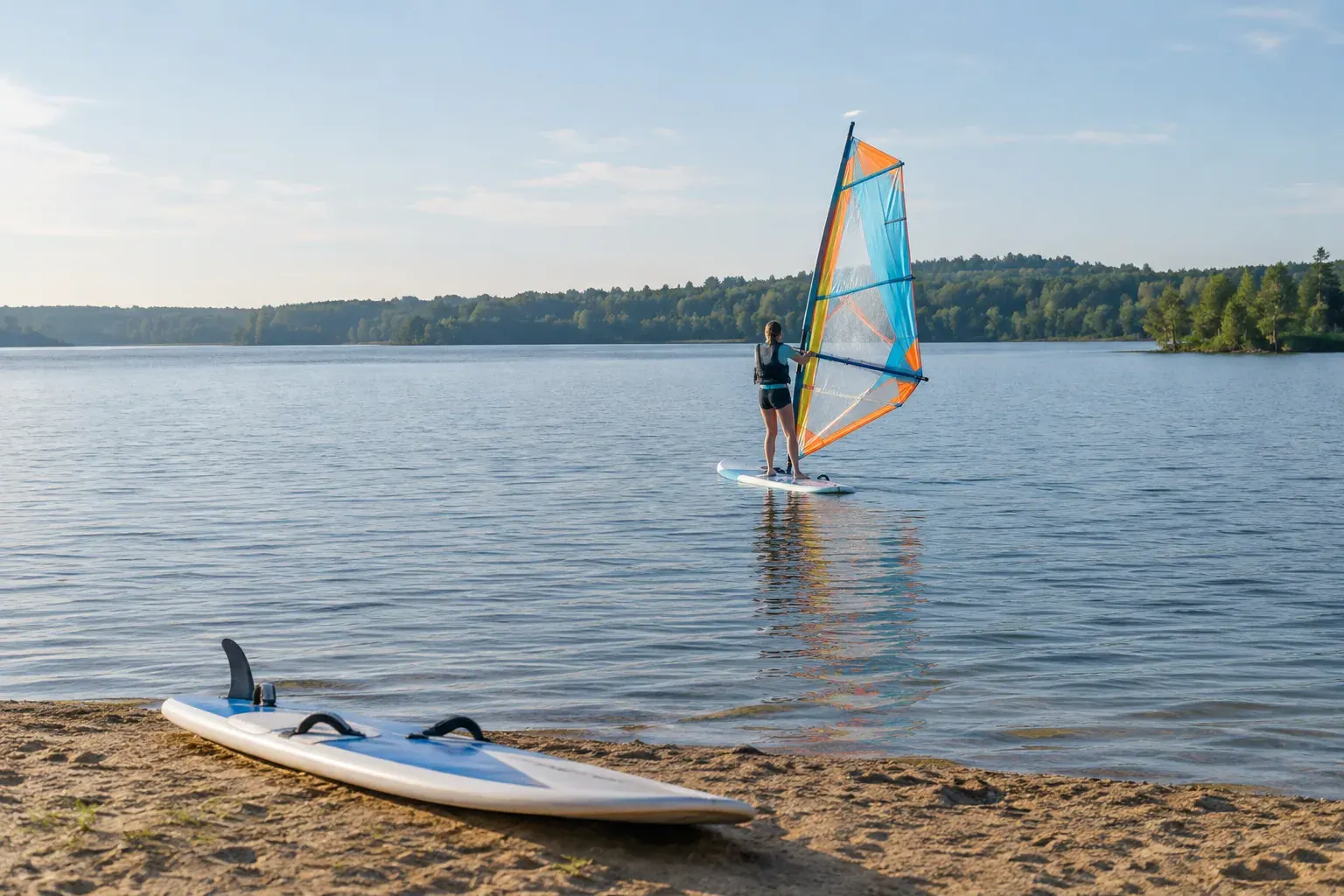
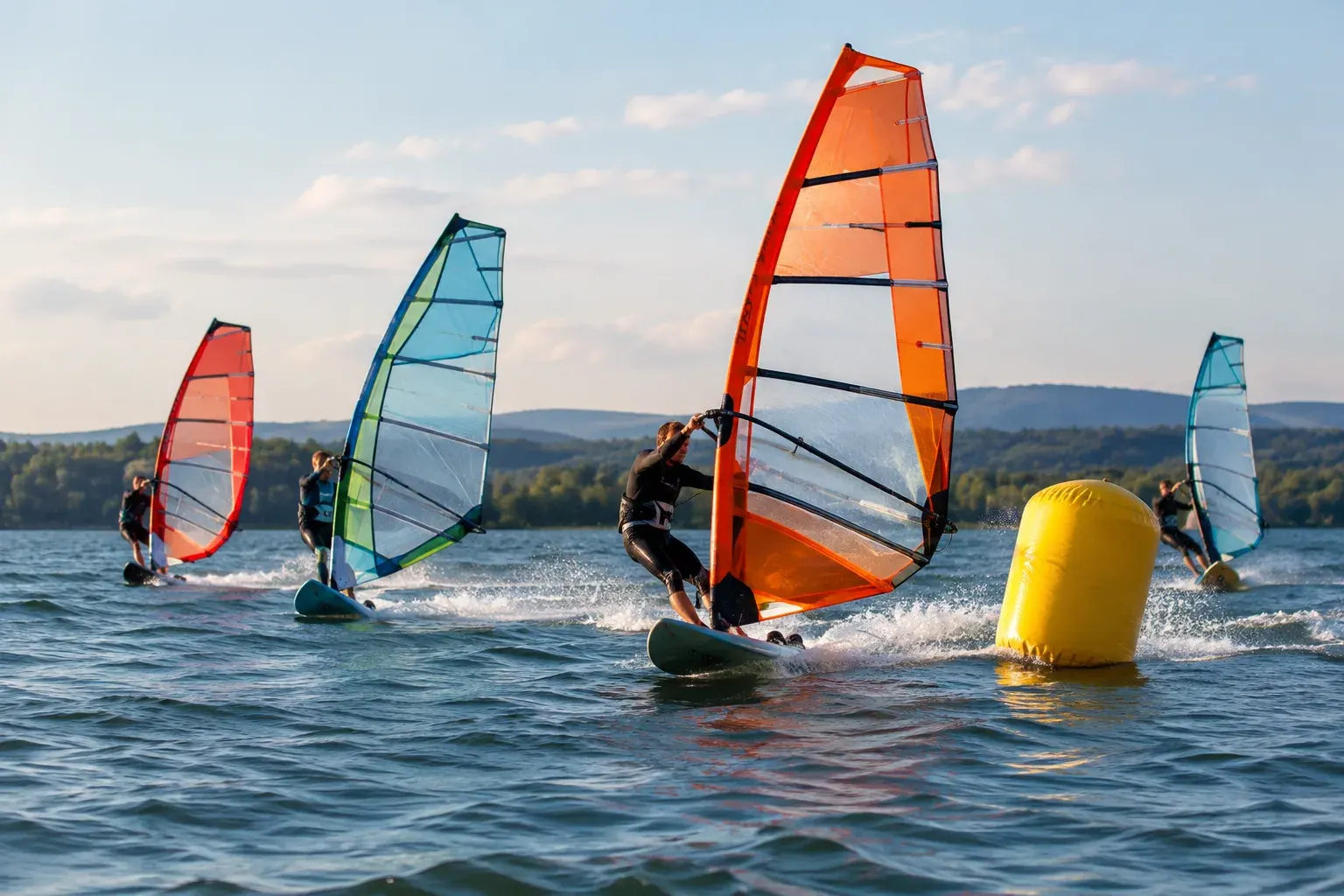
Windsurf slalom is a fast, close-quarters form of racing in which sailors compete around a short course marked by buoys. If you already sail recreationally, a regatta can look like a free-for-all: boards converge near the line, racers jibe around marks and the fleet spreads out quickly. Learning the format and basic rules makes it easier to follow the action and decide when you are ready to enter.
This guide explains common course layouts, starts, equipment limits and scoring. You will also find practical ways to locate amateur racing in the United States and prepare for your first event without needing professional-level gear.
What windsurf slalom racing is
Slalom is a race between multiple windsurfers, usually on a compact course that emphasizes speed, reaching and gybing. A reach is a point of sail between sailing into the wind and sailing directly downwind. Racers sail around marks in a prescribed order, and the first eligible sailor to finish wins that race or heat.
The course is typically set in open water, a bay or a protected stretch of lake. Organizers may adjust mark positions to suit the wind, water depth, traffic and available space. A course can be short enough for spectators on shore to follow, but conditions on the water can still change quickly.
Slalom differs from a long-distance race, which covers a longer route, and from course racing, which may include several upwind and downwind legs. Some events use a slalom-style course with added features or different equipment categories. The event’s official documents define what that particular race includes.
Good to know: A sailor’s result depends on more than top speed. A clean start, controlled gybes, good positioning and avoiding penalties can matter just as much.
Course formats and marks
There is no single slalom course used at every regatta. A common layout sends the fleet from a start line around two or more marks, often on repeated reaching or downwind legs, before a finish. The course diagram and mark order in the event’s sailing instructions are the reference, not a course you infer from watching other sailors.
Organizers may use a fleet race, in which all competitors start together, or divide the group into heats. A smaller local event might run straightforward fleet races, while a larger event may use elimination rounds to narrow the field. Wind and water conditions can lead race officials to move marks or change a course between races, following the event procedures.
At each mark, you must round it on the required side and give other competitors the room required by the applicable racing rules. The space gets crowded when several boards arrive together. A sailor who approaches too fast, changes direction late or cuts inside without room can cause a collision or earn a penalty.
Before racing, study the course diagram and identify:
- The start line, first mark and finish line.
- The order in which marks must be rounded and which side to leave each one on.
- Any restricted areas or special instructions.
- The committee boat, race marks and shore location, so you can orient yourself on the water.
If the course is unclear, ask the race office or race committee before leaving shore. Do not rely on a verbal description from another competitor if the written instructions say something different.
Starts and mark roundings
A slalom start is a planned approach to a line between two endpoints, often a committee boat and a buoy. The race committee signals the countdown, and competitors maneuver into position before crossing the line in the direction and at the time specified in the sailing instructions. The exact sequence and signal meanings can vary, so attend the briefing and learn the event’s procedure before your first start.
The start is a tactical contest. Sailors look for a clear lane, enough speed to cross efficiently and a position that does not trap them behind the fleet. Starting too early can lead to an individual recall or another penalty. Starting too late can leave you in dirty air, behind other sails, with fewer options at the first mark.
A practical approach for a new racer is to prioritize a clean, controlled start over forcing a gap. Keep looking around, leave yourself room to maneuver and avoid steering into another sailor’s path. The rules assign rights and obligations based on situations such as which board is on which tack, overlap and proximity to a mark. Learn the rules named for the event and ask an experienced sailor or race official about situations you do not understand.
Mark roundings call for the same mix of rules and judgment. Look well ahead, choose a line early and avoid a last-second turn that leaves another board without room. If contact or a rule breach occurs, follow the event’s process for taking a penalty or filing a protest. A penalty is not a substitute for preventing a collision.
Safety note: Slalom starts and mark roundings bring fast boards, fins and sails close together. Wear the required safety equipment, keep a deliberate lookout and do not race in conditions beyond your ability to control your board.
Equipment rules and what to bring
Slalom gear is designed for speed, but event rules determine what you may race with. Some regattas use an open format that allows a range of equipment. Others specify a class, board or sail category, or limit how many boards, sails or fins a competitor can use. Those limits are not universal, so check the notice of race, class rules and sailing instructions before packing.
Your equipment should be reliable and familiar. A board that feels fast but is difficult for you to control can be a poor choice for crowded starts or gusty water. If you are still comparing board types, see How to Choose a Windsurfing Board: Volume, Size and Skill Level.
Use this checklist as a starting point, then follow the event’s official requirements:
- Board, sail, mast, boom, fin and other permitted components, checked for damage.
- Sail numbers or other identification required by the event, visible and prepared as instructed.
- Harness, helmet, impact vest or buoyancy aid if required, and any other specified safety equipment.
- Wetsuit or other clothing suited to the water temperature, sun protection and drinking water.
- A repair kit and spare parts for shore-side problems, plus a plan for getting help on the water.
Rules may require equipment to be available for inspection or limit changes during a race or series. A sailor may not be allowed to swap to a different setup simply because the wind changes. Ask the race organizer what is permitted before making assumptions.
Pro tip: Write down your equipment setup before the event, including sail size and fin. It helps you prepare consistently and explain your choices if the event has equipment checks.
How scoring and eliminations work
In a fleet race, finish position is generally converted into points under the scoring system named in the event rules. Low-point systems are common in sailboat racing: a lower score is better, and a first-place finish earns fewer points than a later finish. The exact points for a non-finish, disqualification or other result are set by the applicable rules.
A series may combine results from several races, and the event can allow a discard, meaning one specified result is excluded from a sailor’s total. Whether there is a discard, and when it applies, depends on the event’s scoring instructions. Do not assume one poor race will be dropped automatically.
In an elimination format, the fleet is split into heats. Competitors earn places in later rounds through their heat results, while others may have another chance in a repechage or similar round if the format provides one. The field eventually reaches a final, which determines the leading places. The bracket, advancement rules and treatment of sailors who do not advance should be explained in the event documents.
| Format or result | What it means | What to check |
|---|---|---|
| Fleet race | The group starts together and is ranked by finish | Number of races and series scoring rules |
| Heat | A portion of the fleet races in a round | How many advance and how ties are resolved |
| Repechage | A second-chance round in some elimination systems | Who may enter and how many move on |
| DNF or DSQ | Did not finish, or was disqualified | The penalty and whether a result may be discarded |
If you believe a scoring entry is wrong, ask the race office promptly and use the published procedure. Keep track of your sail number and race results, and read any notices posted during the event.
Finding a US regatta and preparing to race
Amateur opportunities are often organized by local windsurfing groups, sailing clubs, community associations or windsurfing schools. Ask nearby clubs whether they host slalom races, practice starts or informal race days. Some events welcome beginners in a separate fleet; others expect entrants to know the course and racing basics already.
Before registering, ask the organizer:
- Is the event suitable for a first-time racer, and is there a novice fleet?
- What equipment class and safety gear are required?
- Is there a competitors’ meeting, practice session or on-water support?
- What are the entry requirements, fees, cancellation terms and local launching rules?
- What wind, current, water temperature and rescue conditions should you expect?
A local club can help you learn how a start sequence works and how to read course instructions before you are in a crowded fleet. If you want a refresher on right-of-way concepts and basic race preparation, Sailing Basics for Beginners: Essential Tips to Get Started on the Water is a useful companion.
A practical training plan
Build skills in stages rather than trying to simulate a full regatta on your first day. Practice in open water with a reliable buddy or appropriate safety support, and choose conditions you can handle comfortably. If you are new to windsurfing, take instruction before entering a race.
- Get comfortable with control. Practice sailing in both directions, adjusting your stance and returning to your launch point. Work on uphauling or waterstarting, depending on your skill and setup.
- Practice gybes. Start with controlled turns in open space. Focus on keeping speed, looking where you want to go and avoiding a sudden, uncontrolled turn.
- Add course awareness. Sail around two or three practice marks in the order you choose. Look ahead before each turn and leave room for an imaginary competitor.
- Rehearse starts. Use a watch or a partner’s countdown to practice approaching a line, holding position and crossing at a planned time. Do not create a crowded start with other sailors unless everyone has agreed to practice it.
- Practice recovery. Know how to remount, retrieve or secure your gear, and signal for help. Do not assume you can safely handle a broken mast, lost board or changing weather alone.
A few short, focused sessions can be more useful than one long session that leaves you exhausted. Rest when concentration or control starts to slip. For more general race-day skills, the guide to Sailing Basics for Beginners: Essential Tips to Get Started on the Water covers fundamentals that also apply beyond slalom.
Common mistakes to avoid
Treating every event as the same. Equipment limits, course layouts, starts and scoring can differ. Read the documents for your specific regatta, attend the briefing and ask questions before racing.
Chasing the perfect start. A risky start can cost you control or put you in another sailor’s way. A safe start with room to maneuver is a better learning goal than squeezing into a gap at any cost.
Looking only at the mark. Check the other boards around you and plan your approach early. A last-second turn can create a collision and may break the rules.
Using unfamiliar gear on race day. Test your setup beforehand in appropriate conditions. A small adjustment can affect control, and a regatta is not the best place to learn how a new sail or fin behaves.
Ignoring fatigue and conditions. Wind, chop, cold water and repeated high-speed turns can wear you down. Sit out if conditions exceed your ability, tell someone if you need help and follow the race committee’s safety directions.
The Bottom Line
Windsurf slalom is a high-speed race around marks, but the format is manageable when you understand the course, start procedure, equipment rules and scoring system. The event’s notice of race and sailing instructions answer the details that vary from one regatta to another.
Start with a local club or novice-friendly race, practice gybes and starts in safe conditions, and bring equipment you know how to control. Your first goal is to finish safely, learn the routine and leave with a clear idea of what to practice next.
Frequently asked questions
What is a slalom course in windsurfing?
It is a short marked course that usually features fast reaching or downwind legs and gybes around buoys. The exact mark order and layout vary by event, so use the course diagram in the sailing instructions.
Do you need special equipment to enter a windsurf slalom race?
Not always. Some regattas allow a range of gear, while others specify an equipment class or limit boards, sails or fins. Check the event documents and required safety equipment before registering.
How is windsurf slalom scored?
In a fleet race, sailors are ranked by finish and receive points under the event’s scoring system, which may combine several races. Elimination events use heats to advance competitors toward a final, and the advancement rules vary by event.
Can a beginner enter a windsurfing regatta?
Some local regattas welcome beginners or offer a novice fleet, but others expect racers to know basic rules and self-rescue skills. Contact the organizer to ask about experience, equipment and safety requirements before signing up.
What should I practice before my first slalom race?
Practice sailing in both directions, controlled gybes, approaching a start line and rounding marks while looking for other sailors. Also rehearse recovering from a fall and choose practice conditions within your skill level.